

This guide covers the full Japandi kitchen — from structural decisions like layout and cabinet style, to styling decisions like colour and texture, to the daily habits that keep a kitchen looking calm. Every section includes what to do if you can renovate, and what to do if you absolutely cannot. That distinction is missing from almost every other guide out there. It shouldn't be.
Japandi Kitchen Design: Layout, Cabinets & Materials

Japandi design sits at the meeting point of Japanese wabi-sabi — beauty in imperfection and restraint — and Scandinavian hygge, which values warmth, function, and lived-in comfort. (For a full explanation of both philosophies, see our dedicated guide to what Japandi actually means.) In the kitchen, that combination produces something very specific: flat surfaces, natural materials, very little on show, and nothing that doesn't need to be there. For specific inspiration on this, see our 10 Dark Japandi Living Room Ideas for a Moody Atmospheric Home.
The structural decisions matter most here. Get these right and the styling layer almost takes care of itself.
Japandi Kitchen Island vs. No-Island Layouts: Galley, Peninsula, L-Shape & One-Wall Ideas

An island works in a Japandi kitchen when you have at least 900mm (about 36 inches) of clearance on all sides. Less than that and the kitchen feels blocked, not calm.
If your kitchen is long and narrow, a galley layout — two runs of units facing each other — is more practical and more honest to the style. A peninsula, which is an island attached to one wall, gives you prep space and a breakfast bar without needing a large footprint. An L-shape layout is often the best middle ground for medium-sized kitchens: two adjoining runs of units free up a full corner for a small table or a run of open shelving, without the floor-space demands of a full island. For specific inspiration on this, see our 10 Japandi Living Room Color Schemes That Designers Actually Use.
If your kitchen is a single wall, that is not a problem to solve — it is a constraint that pushes you toward better organisation. One-wall kitchens suit Japandi well when the rest of the room is kept clear.
> Renting or can't renovate? You cannot add an island, but you can add a freestanding kitchen trolley in white oak or black steel — around $120–$250 — that rolls away when you need floor space. It gives you prep surface without a permanent footprint.
Japandi Kitchen Cabinet Design: Colors, Handles, Knobs, Glass Fronts & the No-Upper-Cabinet Look

Flat-panel (slab) doors are the most Japandi-appropriate choice. Shaker doors work too, but only with very shallow rails — no more than 50mm wide. Avoid raised-panel doors entirely.
For colour, muted mid-tones age better than trend colours. Warm white, linen, warm grey, dusty sage, and matte charcoal all hold well. Pick a colour that reads as a neutral in your specific lighting conditions — test a large painted sample card before committing.
For hardware, handleless push-to-open mechanisms are the cleanest option. If you want visible hardware, solid brass or matte black bar pulls and knobs (around $8–$18 each) suit the style — a slim round knob reads quieter than a long bar pull if you want the fronts to stay visually flat. Avoid anything chrome or highly polished.
For a small number of upper cabinets, glass-front doors are a good middle ground between fully open shelving and closed storage — they let you display a curated set of ceramics while still keeping dust and clutter out of sight. Use reeded or frosted glass rather than clear if what's behind it is mismatched or busy.
The no-upper-cabinet look — open wall space above the worktop — is a strong visual move in Japandi kitchens. It makes a small kitchen feel less closed in.
> Renting or can't renovate? You can fake the open-top look by removing upper cabinet doors (store them safely — replace them when you leave). Fit open shelves instead if the carcasses are removable. For hardware, cup pulls, bar handles, and knobs are almost always a direct swap — unscrew the old ones, fit new ones, no damage to the cabinet itself.
Japandi Kitchen Countertops, Backsplash & Flooring: Choosing by Budget and Maintenance

For worktops, the honest ranking by budget is: butcher block solid oak ($60–$120 per linear foot installed), then honed Silestone or engineered stone in warm white or greige ($100–$180 per linear foot), then real travertine or honed marble ($150–$280 per linear foot). Travertine looks wonderful but needs sealing every one to two years, and marble stains easily around a sink or hob — both are a commitment, not just a look. If you want the durability of stone without the maintenance, a leathered granite countertop in a warm grey or greige tone is a practical, lower-fuss alternative that still reads as natural material. Oak needs oiling every six months.
For backsplash, unglazed terracotta tiles or stone-look porcelain in a brick or stacked layout are the most appropriate. Herringbone works, but only in a flat, matte tile — not a glossy subway tile.
For flooring, wide-plank oak (genuine or LVT lookalike) at 180mm–220mm wide ties the kitchen into the rest of the home. Terracotta hex tiles are also excellent.
> Renting or can't renovate? Peel-and-stick backsplash tiles have improved significantly — look for stone-look vinyl panels in travertine or limestone finishes, around $3–$6 per tile. For flooring, peel-and-stick LVT in warm oak runs around $2–$4 per square foot and leaves no residue on removal. Both are rental-safe when fitted correctly.
Japandi Kitchen Appliances, Range Hood, Sink & Faucet: Picking Fixtures That Disappear

The goal with appliances is visual recession. A slimline chimney hood in matte black or brushed steel reads as an architectural detail rather than a product. Integrated refrigerators — panel-ready, fitted behind a matching cabinet door — disappear into the run of units.
For the sink, an undermount single-bowl in fireclay or matte composite (rather than polished stainless steel) keeps the worktop line clean and avoids the one shiny surface that tends to catch the eye first. A wide, shallow single bowl also suits the style better than a divided double bowl — it reads as one calm surface rather than a fitted appliance.
For a faucet, a single-lever bridge tap or a tall goose-neck in brushed brass or matte black is the right call. Avoid chrome. Brushed brass adds warmth; matte black adds definition.
The appliance that most disrupts a Japandi kitchen is a large stainless-steel American fridge-freezer — its reflective surface competes with everything around it.
> Renting or can't renovate? You cannot panel a freestanding fridge, but you can visually reduce it. Position a tall open shelf unit or a slim pantry cabinet flush against it on one side. This breaks up the stainless-steel block and pulls the eye along the wall rather than stopping at the appliance. If your sink is stainless steel and can't be swapped, a matte black sink grid or a wooden draining board laid over half of it softens the same reflective problem.
Japandi Kitchen Seating: Bar Stools, Chairs, Benches & Tables

Seating is where a lot of otherwise-restrained Japandi kitchens go wrong — a mismatched, overly modern bar stool undoes a warm, natural-material kitchen fast. For an island or peninsula, choose bar stools in solid wood or a woven rattan seat with wooden legs, kept low enough that the seat sits 250mm–300mm below the worktop overhang.
For a dining nook or an L-shape corner, a simple wooden table and chairs set — or a built-in bench along one wall paired with two or three chairs — keeps the look grounded and avoids the "showroom" feel that a full matching dining set can create. Mixing one chair style with a bench is a deliberately imperfect (wabi-sabi) choice, not a mistake.
> Renting or can't renovate? Freestanding stools and chairs are naturally rental-safe — this is one area where renters and homeowners are choosing from the exact same options.
Price history tracked · tap to check current price on Amazon
 ↑ Price rising
 Kitchen Island with Power Outlet
↑ At peak — price may drop
Price history · 16 weeks
 = Price stable
 Kitchen Faucet,Single Level Stainless Steel
Price history · 16 weeks
 ✦ Editor's pick
 Kitchen Island with Storage
Price history · 16 weeks
Japandi Kitchen Decor: Color Palette, Lighting & Texture (No Renovation Needed)

No structural changes needed for this section. Everything here works in a rental, an HDB flat, or a kitchen you inherited and cannot change. These are the decisions that account for roughly 70% of how a Japandi kitchen actually looks day to day.
Japandi Kitchen Color Palette: How to Build One From Beige, Sage, Olive, Navy, Dark Wood or Black-and-Wood

Start with one neutral base. This covers the largest surface — walls, or the dominant cabinet colour if you have flexibility. Warm white, soft linen, or pale beige are the safest starting points.
Then choose one grounding accent. Sage green works with warm wood and brass. Olive green sits well against raw concrete or stone. Navy is harder to use — keep it to a single surface, like an island base or a painted lower cabinet run. Black and wood is the most graphic pairing; use it when the kitchen has good natural light.
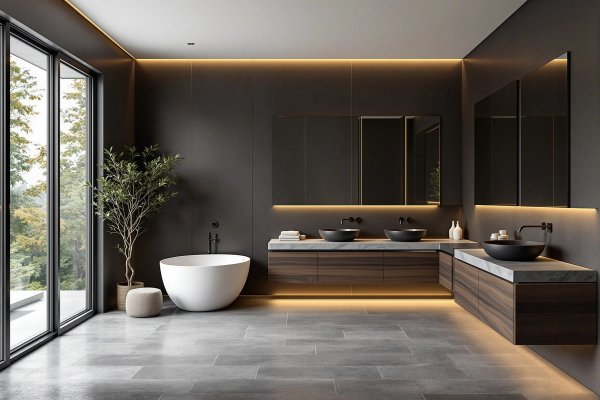
If you're drawn to a moodier look rather than the light-and-airy version most guides default to, a dark wood Japandi kitchen — walnut or dark-stained oak cabinets against a warm white or stone wall — is a legitimate variation, not a departure from the style. It leans slightly more Japanese-minimalist than Scandinavian, and works best with strong natural light or generous artificial lighting to stop the room feeling closed in.
The rule is one neutral base, one accent, and then natural materials — wood and stone — do the rest of the work. The 10 Japandi living room colour schemes that designers actually use follows the same logic and is worth reading alongside this section.
Japandi Kitchen Pendant Lighting: Placement, Scale & Island Lighting Ideas

Over a kitchen island, hang pendants so the bottom of the shade sits 700mm–800mm above the worktop surface. For a 1200mm island, one wide pendant (350mm–400mm diameter) works better than two small ones.
Over a dining table inside an open-plan kitchen, hang the pendant 650mm–750mm above the table surface.
For bulb type, use a warm white LED at 2700K–3000K. Anything cooler than 3000K makes natural materials look flat and grey.
In a rental kitchen with fixed overhead lighting you cannot change, a single plug-in pendant on a fabric cord — around $40–$90 — is a zero-damage way to add a focal point. Drape the cord along the ceiling and fix with adhesive cable clips.
Japandi Kitchen Texture: Rattan, Ceramics, Curtains & Rugs Without the Clutter

The working rule is three materials maximum in any one sightline. Wood (cabinets or shelf), stone (worktop or tile), and one soft material (linen curtain, jute rug, rattan basket). After three, the eye starts to work too hard.
A linen café curtain on a tension rod beneath the sink is a practical detail that also softens the kitchen. A jute or cotton runner in front of the hob or sink — around $35–$80 for a 50cm × 150cm size — adds warmth underfoot without overwhelming the floor.
Rattan enters best as a contained object: a small rattan tray on the counter, a rattan-front cabinet door if you are replacing doors, a woven basket for onions or bread. Keep rattan to one or two pieces, not five.
Japandi Kitchen Plants: How Much Greenery Is Actually Enough

Two to three plants in a kitchen is the workable maximum. One on the windowsill, one on the open shelf, one hanging from a bracket near natural light. More than that and the kitchen starts to look maintained rather than calm.
The best choices for low-light, high-humidity kitchens are pothos, devil's ivy, or a small-leaf philodendron. A single mature monstera is a strong single statement if you have a wider windowsill or a corner with indirect light.
Resist the urge to add a row of herb pots along every surface — it looks busy within a week.
Japandi Kitchen Organisation: Storage, Pantry & Open Shelving Systems

This section works identically whether you own or rent. Organisation is not about buying clever products — it is about making decisions once so you do not have to remake them every day.
The Clear-Counter Method: A Simple Rule for What Earns Counter Space

Every object on your counter needs to pass a single test: do you use it daily? If the answer is yes, it earns counter space. If the answer is "most days" or "a few times a week," it goes in a cabinet.
The objects that typically earn counter space in a Japandi kitchen: kettle, one cutting board, a small ceramic dish for cooking salt, a knife block or magnetic strip. That is usually four objects maximum.
A clear counter is not a style choice — it is a maintenance habit, and it is the single most effective thing you can do to make your kitchen feel Japandi without spending a penny.
Japandi Kitchen Storage: How to Set Up a Pantry, Hutch or Cabinet System

Zone your storage by frequency of use. Daily items (plates, glasses, coffee, tea) go at eye level or in the most accessible drawers. Weekly items (baking supplies, specialty grains) go on higher shelves or in deeper lower cabinets. Rarely used items (seasonal equipment, spare appliances) go in the highest or most awkward spaces.
A Japandi-style hutch — a freestanding unit with a solid lower section and open upper shelving — works well in a kitchen that lacks a pantry. It also works in a rental where you cannot fit built-in storage. Look for solid wood versions in oak or ash, around $350–$700.
Decanting dry goods into uniform glass or ceramic canisters is a visual simplifier, not a design affectation. It reduces the visual noise of thirty different packaging colours inside a cabinet.
Japandi Kitchen Open Shelves: The Rule of Three for Display Without Drift Into Clutter

Open shelving in a Japandi kitchen works when it is curated and stays curated. The rule of three gives you a structure: each shelf holds one functional object, one natural material object, and one empty space.
An example: a stack of three matte ceramic bowls (functional), a small stoneware vase (natural material), and clear space to the right. That is it. Adding a fourth object is what tips a shelf from intentional to busy.
Revisit open shelves every two to three weeks. Objects accumulate without anyone putting them there deliberately. Remove anything that arrived without a decision being made about it.
Japandi Kitchen Ideas by Scenario: Apartment, HDB BTO, Open-Plan & Small Kitchens

The right starting point depends entirely on what you can and cannot change. Here are the four most common scenarios, each with its own sub-article for deeper guidance.
Full remodel: You can choose every surface, layout, and fixture. Start with the layout decision (island vs. galley vs. peninsula vs. L-shape), then cabinets, then surfaces. The full structural guide above applies.
Cabinet refresh only: Paint existing cabinets in a warm matte finish — linen, warm grey, or dusty sage — swap hardware, and add open shelving where upper cabinets were. This is the highest-impact single change for the cost.
Open-plan kitchen and living room or dining combo: The key is visual continuity. Use the same flooring throughout and match one colour element between the kitchen and the adjacent space. The 12 small Japandi living room ideas that make any space feel bigger has specific advice on open-plan transitions that applies directly here.
HDB BTO or small apartment: Work with what you have. Prioritise the decor and organisation pillars above — colour palette, pendant lighting, clear counters, and open shelving curation. These changes cost very little and produce the majority of the visual result. For broader Japandi room guidance, the ultimate Japandi bedroom guide shows how the same restraint principle works across the whole home.
Japandi Kitchen Mistakes That Are Easy to Make (And Easy to Fix)
1. Over-matching wood tones. Using the same oak finish on the floor, cabinets, shelf, and cutting board makes everything look flat. Mix two tones — lighter wood on cabinets, darker wood on the floor, or vice versa.
2. Using too much black. Black as an accent is strong. Black on cabinets, worktop, hardware, fixtures, and accessories simultaneously is heavy and hard to live with. One black element per sightline is the working limit.
3. Decorative clutter on open shelves. Objects accumulate. A shelf that looked right last month looks busy now. The fix is a monthly audit — remove one object and see if the shelf improves. It usually does.
4. Getting the lighting temperature wrong. Warm materials — wood, terracotta, unglazed ceramic — look cold under daylight or cool-white bulbs. Use 2700K–3000K throughout. This is a $15–$40 fix (replacement bulbs) and the difference is immediate.
5. Renovating when styling would have worked. Many kitchens that feel wrong are one colour change and a hardware swap away from feeling right — not a full remodel away. Work through the decor and organisation pillars before you spend money on structural changes. You may not need them.
Related Japandi Kitchen Guides
Explore the full cluster for deeper guidance on each element:
- The Full Japandi Kitchen Colour Guide — [link placeholder]
- Japandi Kitchen Cabinets: Every Style Explained — [link placeholder]
- Small-Space & Rental Japandi Kitchen Ideas — [link placeholder]
- Japandi Kitchen Lighting Guide — [link placeholder]
- Japandi Kitchen Organisation & Storage Systems — [link placeholder]
Pin your favourite pieces of this guide as you go — a Japandi kitchen moodboard made from your own saves (a colour palette pin, a lighting pin, a storage pin) is a more useful planning tool than any single photo, because it forces you to decide what you actually want before you commit to anything.
Frequently Asked Questions
What colours work in a Japandi kitchen? Warm white, soft linen, beige, dusty sage green, olive, dark or stained wood, and matte charcoal all suit Japandi kitchens. The method is one neutral base colour on the dominant surface (walls or cabinets), one grounding accent on a secondary surface (island base, lower cabinets, or a single wall), and natural materials — wood and stone — doing the rest. Avoid anything glossy or highly saturated.
Can I do a Japandi kitchen in a rental or HDB flat? Yes. The design section of this guide covers structural changes, but the decor and organisation sections require zero permanent changes. Swapping cabinet hardware or knobs, adding a plug-in pendant, fitting a peel-and-stick backsplash, and clearing the counter are all rental-safe moves that collectively produce most of the visual result.
What is the difference between a Japandi kitchen and a Scandinavian kitchen? Scandinavian kitchens tend to be slightly warmer, softer, and more functional-practical in their styling. Japandi kitchens add a layer of restraint from Japanese design thinking — fewer objects on display, more considered negative space, and a preference for imperfect or handmade materials (unglazed ceramics, hand-oiled wood) over perfectly smooth finishes. In practice, the overlap is significant: both favour flat-panel cabinets, natural materials, and muted colour.
The single most effective Japandi kitchen decision is also the simplest: clear the counter, choose one palette, and let the materials speak. Everything else is a refinement of that starting point.
Comments