

Walk into a room with pale birch floors, white walls, and a chunky wool throw. Now walk into a room with a low walnut sofa frame, warm greige plaster walls, and a single woven pendant light. Both rooms feel calm. Both feel considered. But they feel completely different to live in.
That difference is the whole point of this article. Japandi vs Scandinavian design is one of the most searched comparisons in home decor right now — and for good reason. The two styles share DNA but express it through opposite philosophies. By the end of this guide, you will know exactly which one matches how you actually live. For the complete picture, explore our full guide: Japandi Style Explained: The Complete Beginner Guide to Japandi Decor.
Two Styles That Look Alike But Feel Completely Different to Live In
Both styles use natural materials, neutral colours, and restrained furniture. Both reject clutter. Both favour quality over quantity.
So why do they feel so different in photos — and even more different in person?
The answer comes down to two words: hygge and wabi-sabi. Scandinavian design is built around hygge — the Danish concept of warm, cosy togetherness. Japandi is built around wabi-sabi — the Japanese appreciation for imperfection, stillness, and quiet restraint. Every surface-level difference between these two styles traces back to that root. You'll find even more ideas in 7 Japandi Living Room Mistakes to Avoid (and What to Do Instead).
Scandinavian Design: Warmth, Light, and the Logic of Hygge

Born From Long Winters: Why Scandinavian Design Prioritises Light

Scandinavian interior design emerged in the early-to-mid 20th century across Denmark, Sweden, Norway, and Finland. It was not born from an aesthetic movement. It was born from necessity.
Nordic winters are long. Daylight hours are short. Homes needed to feel warm, open, and bright even when the sun barely rose.
That practical need explains almost every Scandinavian design choice — white walls, pale woods, sheer curtains, and large uncovered windows. Light was not a decorative choice. It was survival logic turned into a design language.
Hygge: The Cosy Togetherness That Shapes Every Scandinavian Room

Hygge (roughly pronounced "hoo-gah") is often translated as cosiness. But it is more specific than that. It describes the feeling of warm comfort shared with other people — a gathering, a meal, a evening in with friends.
That social quality matters. Scandinavian rooms are designed for people to spend time in together. Furniture is arranged casually. Seating is plentiful and soft. The occasional mustard cushion or terracotta throw adds warmth without formality.
Rounded chair legs, wool textiles, and simple pendant lights all serve the same goal. They make a room feel welcoming without making it feel staged.
Japandi Design: Quiet Restraint and the Influence of Wabi-Sabi
A Hybrid Style With Deep Roots: Where Japandi Actually Comes From

Japandi as a named trend gained traction after 2019, driven largely by Pinterest and Instagram. But it is not a trend invented by social media. It draws on design traditions from both cultures that go back centuries.
The fusion works because Scandinavian and Japanese design already share core values — function, simplicity, natural materials, and a rejection of excess. Japandi takes Scandinavian practicality and layers Japanese philosophy on top of it.
The result is a style that feels newer than Scandinavian design but is rooted in ideas far older than either trend cycle.
Wabi-Sabi: Why Imperfection and Stillness Are the Whole Point

Wabi-sabi is a Japanese philosophy centred on finding beauty in imperfection, incompleteness, and the natural passage of time. A handmade ceramic bowl with an uneven rim. A plaster wall with visible texture. A piece of furniture that shows its grain.
In Japandi design, these "imperfections" are not flaws to hide — they are the design. Nothing is smoothed over for the sake of polish.
That philosophy drives the darker tones, raw textures, and deliberate empty space in Japandi rooms. Stillness is not emptiness. It is an intentional choice.
Japandi vs Scandinavian — The Four Differences That Actually Matter
Colour Palette: Bright and Airy vs Grounded and Earthy

Scandinavian interiors favour whites, light greys, and soft pastels. There is often one bold accent colour — a mustard yellow cushion, a turquoise ceramic, a red-framed print. The goal is brightness. The room should feel like it is catching natural light.
Japandi colour palettes run deeper. Taupe, charcoal, warm greige, terracotta, deep sage green, and matte black are common. There are rarely bright pops of colour.
The Scandinavian palette says "come in and stay a while." The Japandi palette says "slow down and be still." Both are valid. They just create entirely different rooms.
Wood Tones and Materials: Pale Birch vs Dark Walnut

Scandinavian design uses light woods — birch, ash, and pine. Furniture feels airy because the wood itself is pale. Textiles lean soft: wool, cotton, light linen in cream or oat tones.
Japandi reaches for darker wood. Walnut and black-stained oak are signature materials. Paired with raw linen, stone surfaces, bamboo, and handmade ceramics, the result is grounded rather than lifted.
Wall finishes also differ. Scandinavian rooms tend toward smooth, matte-painted surfaces — often bright white. Japandi rooms frequently use textured plaster or limewash finishes where the wall surface itself adds tactile interest.
Furniture Shape and Scale: Lifted and Light vs Low and Straight

Scandinavian furniture is characterised by slender legs, rounded forms, and silhouettes that feel light. A dining chair with tapered ash legs. A sofa raised off the floor. The effect is airiness — furniture that does not dominate a room.
Japandi furniture sits much closer to the ground. Low-profile sofas, platform beds, and floor-level coffee tables echo the Japanese tradition of living close to the floor. Lines are straight. Ornamentation is absent.
That low-to-the-ground quality changes how a room feels to be in. It slows you down. It creates a different relationship between your body and the space.
Overall Mood: Casual-Cosy Social Space vs Meditative Quiet Room

A Scandinavian room feels fresh, open, and lived-in. It is a space designed for everyday life — casual gatherings, family evenings, relaxed mornings. It does not take itself too seriously.
A Japandi room feels deliberate and still. Every object has been placed with intention. Empty space is treated as a feature, not something to fill.
Neither mood is better. But they suit different people. And if you share your home, they may suit different members of the same household.
The Smaller Differences That Separate Japandi From Scandinavian Design
Pattern vs Texture: Why Japandi Avoids Print Almost Entirely

Scandinavian design is comfortable with geometric pattern — a patterned cushion cover, a printed rug, a wallpapered accent wall. Pattern adds visual warmth without clutter.
Japandi almost entirely avoids print. Where Scandinavian design uses pattern for visual interest, Japandi uses texture. A rough-weave linen. A ribbed ceramic vase. A rattan side table with visible knots in the weave.
Texture engages your sense of touch, not just your eyes — and that distinction is very Japandi. The room rewards slowing down and looking closely, not scanning quickly.
Lighting: Maximised Natural Light vs Warm Sculptural Glow

Scandinavian rooms maximise natural light. Large windows are left uncovered or fitted with sheer curtains. Simple pendant lights provide overhead illumination in the evenings. Lighting is functional first.
Japandi takes a different approach. Paper lanterns, low-hanging woven pendants, and warm-toned bulbs create pools of soft light rather than evenly lit rooms. Lighting is treated as a sculptural element with its own visual weight.
For Japandi living room design specifically, a single washi paper pendant above a low walnut coffee table does more work than a row of recessed spots ever could.
Wall Finishes: Smooth White Paint vs Intentionally Imperfect Plaster

In a Scandinavian room, walls are clean, smooth, and usually white or very light grey. The wall is a backdrop for furniture and textiles. It does not demand attention.
In a Japandi room, the wall can be part of the design. Textured lime plaster, tadelakt finishes, or matte paint applied with visible brushwork all add depth without pattern.
Surface imperfection is intentional — a direct expression of wabi-sabi. The wall ages. The finish varies. That variation is the point.
Symmetry and Layout: Casual Arrangement vs Deliberate Negative Space

Scandinavian rooms are casually arranged. A sofa faces a coffee table. A rug anchors the space. There is warmth in the informality — nothing feels overly planned.
Japandi rooms are more deliberately composed. Objects are placed with care. Empty wall space and bare floor are treated as active design decisions, not gaps waiting to be filled.
Negative space in a Japandi room is doing work — it creates the stillness the style is built around. Removing the last object from a shelf is as much a design choice as adding one.
Room by Room: How Japandi and Scandinavian Design Look in Practice
Living Room

A Scandinavian living room typically features a pale ash sofa frame with slender legs, white walls, a chunky wool throw in oat or cream, and a mustard cushion for warmth. Natural light floods in through uncovered or sheer-curtained windows.
A Japandi living room centres on a low walnut sofa frame with straight lines, warm greige walls, undyed raw linen upholstery, and a washi paper floor light in the corner. If you want to go deeper on the Japandi side, The Ultimate Japandi Living Room Guide: Everything You Need to Know covers every element in full detail.
The living room is where these two styles feel most different in practice — because the living room is where you either gather socially or decompress quietly.
Kitchen

A Scandinavian kitchen leans into white cabinetry, open shelving displaying simple ceramics, pale birch bar stools, and bright overhead lighting. The goal is a kitchen that feels clean and functional without feeling clinical.
A Japandi kitchen uses walnut cabinetry with finger-pull hardware — no visible handles. A stone or concrete countertop adds raw texture. A single woven pendant hangs over the island. Storage is closed and considered.
The Japandi kitchen asks you to put things away. The Scandinavian kitchen lets you leave them out.
Bedroom

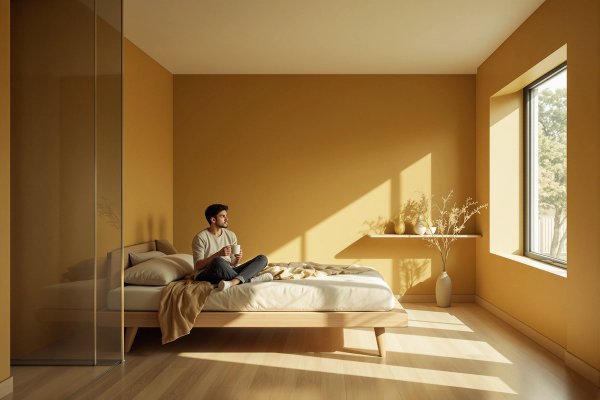
A Scandinavian bedroom uses a pale pine bedframe with visible legs, white bedding in cotton or soft linen, pastel cushion accents, and sheer curtains that let morning light through. It feels fresh and easy.
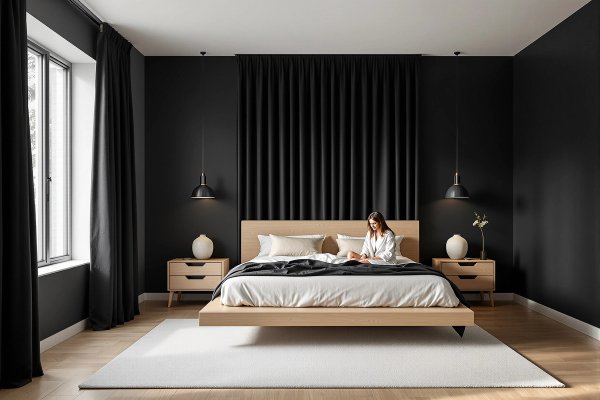
A Japandi bedroom centres on a low platform bed in black-stained oak, undyed linen bedding in warm white or natural, a washi paper roller blind, and no accent colour. The room is quiet. Even at 8am.
The bedroom is the room where the wabi-sabi influence is most felt. Restraint here is not coldness — it is the deliberate absence of visual noise.
Bathroom

A Scandinavian bathroom favours white subway tiles, a bright frameless mirror, a light wood shelf for folded towels, and fluffy white cotton towels. It feels spa-adjacent but lived-in.
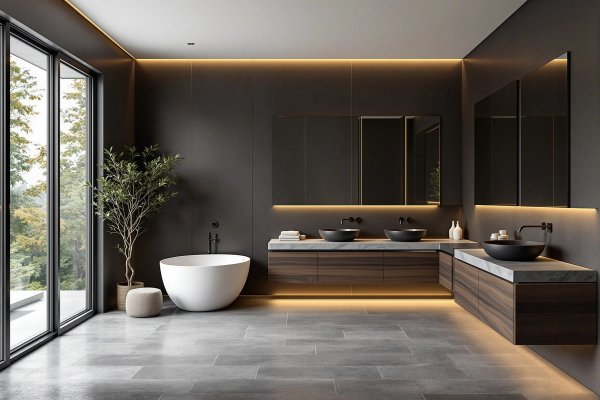
A Japandi bathroom uses a stone or concrete basin, matte black fixtures, bamboo accessories, and a handmade ceramic soap dish with an uneven glaze. Surfaces are matte. Nothing shines.
Both bathrooms are calm. The Japandi version asks slightly more of its materials — they carry more visual weight.
Dining Room

A Scandinavian dining room typically features a round pale ash table, slender-leg dining chairs in bent plywood or moulded form, and a simple globe pendant overhead. It is designed for lingering over meals with other people.
A Japandi dining room uses a low rectangular walnut table, floor cushions or low bench seating, and a single woven pendant light. The table is bare. No centrepiece.
For those interested in how international design authorities approach the Japandi-Scandinavian overlap, Dezeen covers both styles extensively with real residential examples.
Can You Mix Japandi and Scandinavian Without the Room Feeling Confused?
How to Blend Both Styles Without Losing Cohesion
Yes — but only if one style leads. A room that splits 50/50 between the two styles tends to feel indecisive rather than considered.
The easiest way to blend them: choose your wall colour and wood tone first. Those two choices establish the base style immediately. If you go with warm greige walls and walnut furniture, that is a Japandi foundation — and you can add Scandinavian warmth through soft wool textiles or a simple pendant light without losing coherence.
The reverse also works: bright white Scandinavian base, with Japandi influence brought in through a low coffee table, stone accessories, or a raw linen rug. Pick one style as the structure. Let the other contribute texture and warmth only.
Which Style Fits the Way You Actually Want to Live?
Choose Scandinavian Design If This Sounds Like You
- You want your home to feel bright and open, especially in winter
- You host friends or family regularly and want casual, welcoming spaces
- You are drawn to lighter wood tones — birch, ash, pine
- You like the option of a bold accent colour — mustard, terracotta, soft blue
- You want a proven, decades-long design language with broad furniture availability
- Cosiness and warmth matter more to you than stillness
Choose Japandi Design If This Sounds Like You
- You want your home to feel quiet and grounded, not just tidy
- You prefer darker wood tones — walnut, black-stained oak
- You are drawn to raw, tactile materials — stone, bamboo, handmade ceramics
- You want low-profile furniture with straight, considered lines
- You find comfort in stillness rather than in social warmth
- The idea of a room that rewards slowing down appeals to you
Neither list is exhaustive. Many readers will see themselves in both columns. That is exactly why the blending section exists.
Frequently Asked Questions
What is the main difference between Japandi and Scandinavian design?
The core difference is philosophical. Scandinavian design is built around hygge — warmth, cosiness, and social comfort. Japandi is built around wabi-sabi — stillness, restraint, and the beauty of natural imperfection. Every visual difference (colour, wood tone, furniture height) flows from that root distinction.
What colours work in a Japandi living room?
Japandi colour palettes favour deep, earthy neutrals — warm greige, charcoal, taupe, terracotta, and matte black. Bright whites and pastel accents are Scandinavian territory. In a Japandi living room, even "light" tones lean warm and muted rather than crisp or cool.
Can Japandi and Scandinavian design work in the same room?
Yes, with one condition: pick one style as the foundation. Wall colour and wood tone establish the base. If your walls are warm greige and your furniture is walnut, that is a Japandi room — Scandinavian accents can add softness without confusing the overall feel. Splitting the two equally tends to produce a room that feels unresolved.
Both Japandi and Scandinavian design are, at their core, about the same thing: living with less, but better. The difference is whether you want that restraint to feel warm and social, or quiet and deliberate.
Comments