

Picture a room with a low walnut bench, a single ceramic bowl, and late afternoon light crossing a bare plaster wall. Nothing is competing for your attention. Nothing feels missing either.
That balance is what Japandi style is built on. It is not emptiness. It is not a trend. It is the result of two design traditions deciding, independently, that less done with care beats more done quickly. For specific inspiration on this, see our 7 Japandi Living Room Mistakes to Avoid (and What to Do Instead).
What Japandi Style Actually Is (and What It Is Not)

Japandi style is a fusion of Japanese and Scandinavian design. It combines restraint, natural materials, and honest craft into a single visual language.
It is not cold. It is not empty. The most common mistake beginners make is confusing Japandi with bare modernism — a style that removes warmth along with clutter.
Japandi keeps warmth. It uses matte wood, undyed linen, and handmade ceramics precisely because they carry human presence. Removing a printed cushion is not the same as removing comfort. For specific inspiration on this, see our Japandi vs Scandinavian Design: What Is the Actual Difference?.
How Japandi Was Born: The Cultural Exchange Behind the Style

Japan and Scandinavia began trading seriously in the mid-19th century. Japanese woodblock prints, lacquerware, and craft objects reached Denmark and Sweden through European trade routes.
Scandinavian designers studied Japanese attention to grain, joint, and surface. The influence landed in furniture workshops, not showrooms. What passed between the two cultures was a shared belief that an object should reveal how it was made.
The label "Japandi" as a design category emerged much later, around 2017, through interior design media. But the underlying exchange of ideas is over 150 years old.
Japandi vs Scandinavian Design: Where the Two Traditions Part Ways

Scandinavian design centres on hygge — a Danish and Norwegian word for warmth, togetherness, and comfort. It favours pale birch, bright rooms, and layered soft furnishings.
Japandi pulls in a different direction. It uses darker aged woods like walnut and smoked oak. It accepts shadow rather than flooding every corner with light.
Scandinavian design asks how a room can feel welcoming; Japandi asks how a room can feel still. Both are valid questions. They produce noticeably different spaces.
Price history tracked · tap to check current price on Amazon
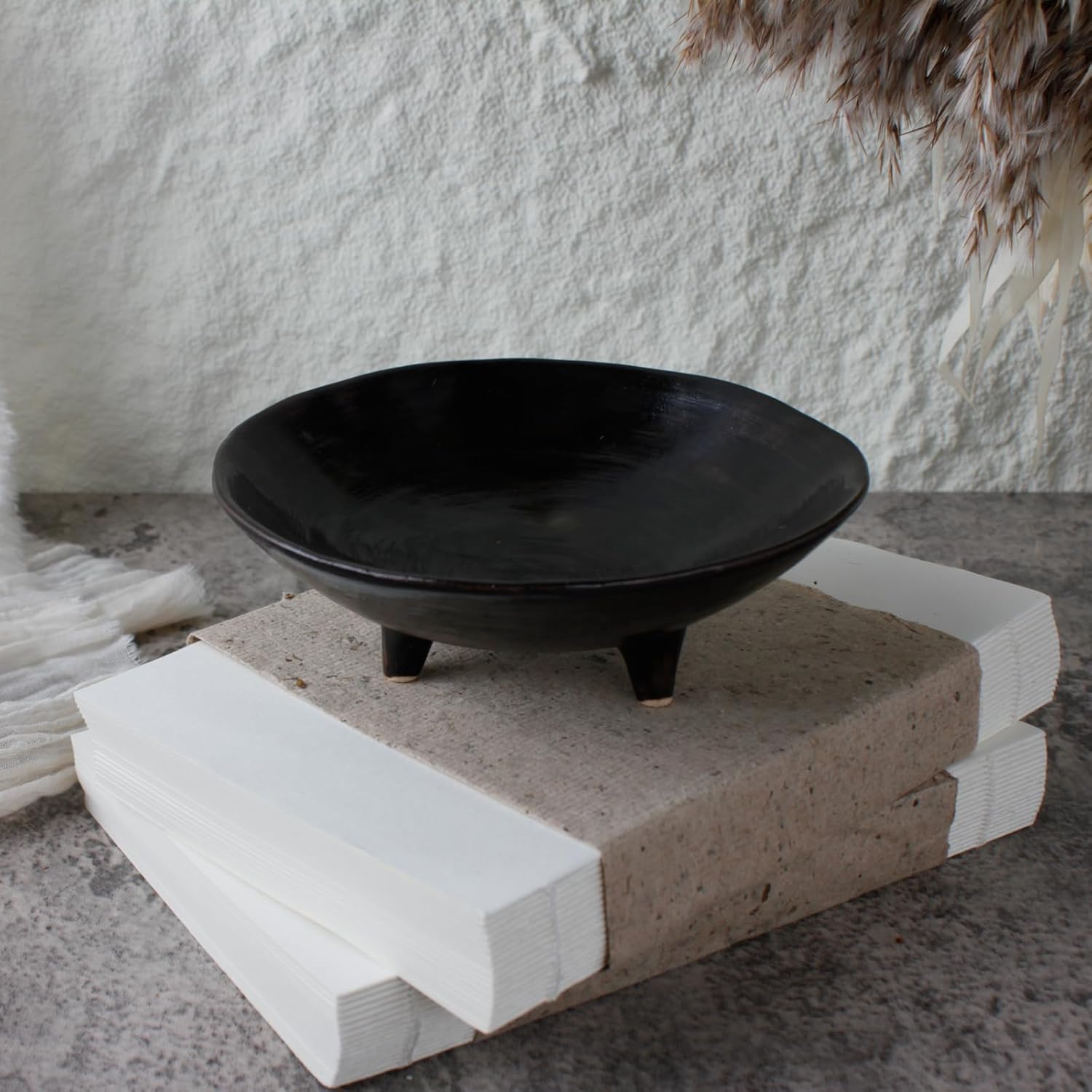 ✦ Editor's pick
 Wabi Sabi Footed Decorative Bowl
Price history · 16 weeks
 ✦ All-time low
 Sandstone Resin Thinker Style Abstract Sculpture
Price history · 16 weeks
 = Price stable
 Tissue Box Cover Holder
Price history · 16 weeks
Wabi-Sabi and Japandi: Related but Not the Same Thing

Wabi-sabi is a Japanese philosophy that finds value in imperfection, transience, and incompleteness. A cracked glaze, a rough-edged bowl, a faded cloth — these are signs of authentic life.
Japandi draws on wabi-sabi thinking. It favours handmade objects over factory-finished ones. It does not fear slight irregularity in a clay pot or a linen weave.
But Japandi is not pure wabi-sabi. Wabi-sabi accepts decay; Japandi still expects a level of quiet refinement. A worn, splitting table is wabi-sabi. A smoothly finished walnut table with visible grain is Japandi.
The Philosophical Core of Japandi: Ma, Lagom, and the Space Between

Two untranslatable concepts sit at the heart of Japandi. The first is the Japanese word ma, which describes negative space as an active, intentional presence — not absence, but room for something to breathe.
The second is the Swedish word lagom, meaning just enough — not too much, not too little. It is a cultural resistance to excess that shapes Swedish design at its root.
Together, ma and lagom explain why a Japandi room can hold very few objects and still feel complete. The empty wall is not laziness. The single plant is not minimalism for its own sake. Both are deliberate decisions.
How Japandi Differs From Other Minimalist Styles You May Already Know

Minimalist interiors often feel clinical. White walls, chrome fixtures, and no soft surfaces produce rooms that look resolved but feel uncomfortable to live in.
Japandi is a minimalist style, but it insists on warmth. Woven grass, unglazed clay, and rough-sawn timber introduce texture that modernist minimalism typically removes. For a broader view of how Japandi fits within contemporary interior design coverage, Dezeen is a reliable reference point.
The handcraft layer is what separates Japandi from cold contemporary design. Every material is chosen because it looks and feels better with human contact — not despite it.
The Materials Japandi Always Returns To — and the Logic Behind Each One

Japandi returns to the same material vocabulary for consistent reasons. Each material is chosen on sensory and philosophical grounds.
Oak and walnut are used for their visible grain and structural honesty. Paper — particularly washi — diffuses light rather than directing it. Unglazed ceramic carries the mark of a hand. Stone, linen, and rattan introduce weight, texture, and natural irregularity.
No material in a Japandi interior is chosen for novelty. Each one earns its place by performing well, ageing honestly, and connecting the room to something outside the factory.
Why Japandi Feels Calm: The Design Reasoning You Can Actually Use

Japandi rooms tend to keep sightlines low. Furniture sits close to the floor. Eye level is mostly open space. This reduces visual noise in the upper half of a room.
The colour palette stays within a narrow tonal range — warm greys, undyed naturals, muted greens, and earthy terracottas. When everything is close in tone, the eye settles rather than scans.
The calm you feel in a Japandi room is a perceptual effect, not an accident. Low furniture, restrained colour, and deliberate spacing remove the micro-decisions your eye normally has to make.
Is Japandi Right for You? Honest Questions Before You Commit

Japandi asks something of the person living in it. It requires comfort with empty space. A large blank wall is not a problem to solve — it is part of the design.
It also requires patience in sourcing. A $60–$120 handmade ceramic bowl from a small studio takes longer to find than a mass-produced alternative. That sourcing process is part of how Japandi works. If you want results quickly, this style will frustrate you.
Ask yourself honestly: do you find empty space restful, or does it make you anxious? Your answer will tell you more about whether Japandi suits your life than any mood board will.
Where to Go Next: The Japandi Articles That Cover Each Room and Topic

This article sets the foundation. The branch articles apply it room by room and topic by topic.
The Ultimate Japandi Living Room Guide: Everything You Need to Know takes every principle from this guide and applies it specifically to living room layout, furniture selection, and material layering.
10 Japandi Living Room Color Schemes That Designers Actually Use works through ten specific colour combinations — with hex references and material pairings — so you can move from philosophy into paint choices with confidence.
Frequently Asked Questions
What is Japandi style in simple terms?
Japandi style combines Japanese and Scandinavian design. It uses natural materials, honest craft, and deliberate empty space to create rooms that feel calm and considered without feeling cold.
Is Japandi the same as minimalism?
Not exactly. Japandi uses minimalist principles — fewer objects, restrained colour, no visual clutter. But it insists on warmth through handmade textures and natural materials. Standard minimalism often removes those elements entirely.
How is Japandi different from wabi-sabi?
Wabi-sabi is a Japanese philosophy that values imperfection and decay. Japandi draws on that thinking but still expects quiet refinement. Japandi objects can be slightly irregular — but they should be well-made, not worn out.
Japandi is worth understanding before you buy a single thing. The philosophy shapes every decision that follows.
Comments