

Most Thanksgiving decor content is really just fall decor with a higher pumpkin count. It clusters everything at the dining table, then leaves the rest of the house completely untouched — even though your guests will spend more time in your kitchen and living room than they ever will sitting down.
This guide is different. It covers every zone your guests actually move through, from the front door to the dessert table, tied together by one warm layered palette: amber, terracotta, and warm cream. That repeated palette is what makes a home look considered rather than decorated — and it costs nothing extra to apply. For specific inspiration on this, see our Fall Porch Decor Ideas: 15 Welcoming Seasonal Transformations for Your Front Door.
The Entryway: Thanksgiving Decor That Makes Guests Feel Welcome Before They're Inside
The entry is the first thing guests see and the last thing they remember. It sets the expectation for the whole home. A front door that leads into a consistent palette tells guests — before they've even taken off their coats — that every room will feel this considered.
Most thanksgiving entryway decor and thanksgiving entry table decor stops at a single wreath. This section goes further, styling both the door and the entry table as one coordinated welcome moment for your Thanksgiving decorations.
Layered Wreath and Sash Styling for a Thanksgiving Front Door

A thanksgiving wreath reads richest when it combines at least three different textures. Start with a base of dried eucalyptus or preserved magnolia leaves — both hold their shape through the whole holiday season. Layer in dried orange slices, small dried seed pods, and three to five cinnamon sticks wired into a cluster. For specific inspiration on this, see our Pink Christmas Tree Decorations: 14 Soft Dreamy Designs for a Feminine Festive Season.
The thanksgiving wreath sash is the detail most people skip. Cut a 3-inch-wide strip of rust-colored linen or burlap ribbon, around 36 inches long. Loop it over the top of the wreath and tie it in a loose knot — not a bow — so it drapes naturally down each side.
That single sash shifts the wreath from grocery store purchase to something that looks foraged and intentional. Stick to amber or terracotta tones to anchor the palette from the very first glance.
Entry Table Vignette With Warm Stacked Lighting and Seasonal Texture

An entry console table needs three things for Thanksgiving: light, a low arrangement, and one warm textile. Use two flameless taper candles in matte terracotta holders — around 10–12 inches tall — placed at different heights on a small riser or a stacked book.
In front of the candles, place a low ceramic bowl or a wooden tray. Fill it with small dried gourds, a few dried orange slices, and one or two stems of dried wheat. Keep the whole arrangement under 8 inches tall so it doesn't block sightlines.
Fold a warm cream or rust-colored linen runner across the tabletop beneath the arrangement. It grounds everything and brings the first hint of soft texture into the home, setting up the palette every other zone in this guide will echo.
The Kitchen: Thanksgiving Decor for the Room Guests Actually Spend Time In

Guests don't wait in the dining room. They drift into the kitchen, offer to help, and end up standing around the island for most of the afternoon. Thanksgiving kitchen decor earns its place here more than almost anywhere else in the home.
The styling challenge in a kitchen is working around function. Every piece you place needs to survive being moved, wiped around, or relocated mid-cook — so scale small and keep the footprint tight.
Kitchen Island Centerpiece Styling That Works Around Food Prep

Thanksgiving kitchen island decor needs to stay low and moveable. A low wooden bowl or a terracotta tray works as the base — aim for 14–18 inches long on a standard island. Fill it with a grouping of small gourds, two or three warm amber pears, and a couple of dried herb bundles: rosemary, sage, or dried bay leaves work well.
Keep the whole arrangement to one side of the island, not centered. Centering it blocks prep space and it gets moved within the first hour anyway.
A cluster of three squat amber glass votive holders placed beside the tray adds warmth once the kitchen light drops in the afternoon. The flickering light in amber glass is one of the simplest and most effective thanksgiving kitchen decorations you can buy — a set of six costs $15–$25.
Open Shelf and Countertop Styling With Seasonal Thanksgiving Kitchen Decorations

Open shelves in a thanksgiving kitchen respond well to small substitutions rather than full seasonal overhauls. Swap one or two everyday items for seasonal pieces: a warm rust-colored ceramic bowl in place of a white one, a bundle of dried sage tied with twine resting against a cookbook.
On countertops, group items in odd numbers. Three small gourds in graduating sizes, or two stacked terracotta pots with a dried stem tucked in each, hold the seasonal feeling without cluttering a working surface.
The goal is to make the kitchen feel dressed, not decorated — a distinction guests feel but can't always name. Keep the cream and terracotta tones consistent with what's already appearing at the front door.
Price history tracked · tap to check current price on Amazon
 ✦ All-time low
 3 Pcs Mason Jar Centerpiece
Price history · 16 weeks
 ✦ Editor's pick
 Thanksgiving Votive Candle Holder Set of 6
Price history · 16 weeks
 ↑ Price rising
 24 Inch Fall Wreaths for Front Door
↑ At peak — price may drop
Price history · 16 weeks
The Dining Table: Thanksgiving Tablescapes Built in Layers, Not All at Once
The dining table is the most photographed spot in the home on Thanksgiving day. It's also the most over-decorated. Thanksgiving tablescapes look most pulled-together when they're built in distinct layers rather than assembled all at once.
Start from the base and work up. That sequence keeps proportions right and stops the table from looking crowded before a single plate is set down.
Runner, Charger, and Floral Layers: Building a Thanksgiving Table Setting From the Base Up

Lay a linen table runner first — unwashed, slightly rumpled linen in warm cream or oatmeal reads more relaxed and expensive than a pressed synthetic one. Center it lengthwise and let it drop 4–6 inches off each end of the table.
Set chargers next. Dark amber glass chargers or matte terracotta-glazed ceramic chargers ($8–$15 each) ground the table in the palette before any food or florals arrive. Space them evenly and confirm they clear the runner's edges before you continue.
The floral layer should sit between charger height and eye level — no taller than 10 inches — so guests can see each other across the table. Use a long, low arrangement of dried protea, dried orange slices, dried pampas stems, and fresh or dried eucalyptus laid directly down the runner's center. This approach to thanksgiving table settings works for six seats or sixteen.
Per-Seat Thanksgiving Table Details That Feel Considered, Not Overdone

Each place setting needs one or two details beyond the plate. Choose one: a linen napkin folded into a loose knot with a sprig of dried rosemary tucked in, or a small handwritten place card resting against the charger.
Don't do both. Two intentional details per seat reads as overdone, and it adds significant setup time. One small, specific detail repeated across every seat is what makes a Thanksgiving table feel considered rather than fussy.
If you use place cards, write them in brown ink on cream card stock — matching the palette even in the smallest details reinforces the whole-home look.
The Living Room: Thanksgiving Home Decor for Where Guests Linger After the Meal
The living room is where Thanksgiving actually lives for most of the afternoon. The meal lasts ninety minutes. The conversation, the football, the second slice of pie — that all happens here. Thanksgiving home decor in this room needs to earn its place functionally, not just visually.
Style the mantel and the seating zone as hosting destinations, not display shelves. The difference is in how inviting and ready-to-use each surface looks when guests drift in.
Mantel and Shelf Styling That Extends the Thanksgiving Table Palette Into the Living Room

Pull the same three tones from the dining table onto the mantel. Place one tall amber glass vase — 14–18 inches — on one side, filled with dried pampas or dried wheat. On the other side, group two or three cream pillar candles in matte terracotta holders at different heights.
In the center, a low terracotta bowl filled with small gourds or a single dried foliage arrangement ties the composition together. Keep the arrangement asymmetrical — it reads more natural and less staged than a perfectly mirrored setup.
The mantel works hardest when it mirrors the dining table palette closely enough that guests feel the connection between the two rooms. That's the moment the whole home starts to feel like one considered space rather than separate decorating efforts.
Textile Layering on Lounge Seating for a Thanksgiving Aesthetic That Invites Staying

Add throws and cushion covers in the palette tones to every main seating piece. On a sofa, fold one rust-colored chunky knit throw over one armrest — not both — and add two cushions in warm cream linen. Keep the third cushion in whatever the sofa's existing color is to avoid over-matching.
On armchairs, a single amber or terracotta-toned velvet cushion is enough. Drape a thin cream cotton throw over the back of the chair rather than the arm, so it reads as an invitation rather than a prop.
Specific fabric combinations that work well: rust chunky knit ($25–$45 from most home stores) paired with cream washed linen cushion covers ($18–$30 each). That texture contrast — rough knit against smooth linen — creates the layered quality that makes lounge seating feel genuinely welcoming rather than just seasonal.
Walls and Windows: The Ambient Backdrop That Makes Thanksgiving Decor Read as Whole-Home
Walls and windows are the background layer. They're not the first thing guests notice, but they're what makes everything else look grounded. When the wall and window zones carry even a small echo of the palette, the whole room reads as deliberately styled rather than seasonally patched together.
This section is about support, not statement pieces. Keep it light.
Thanksgiving Wall Decor That Supports the Room Without Competing With It

One or two wall pieces are enough. A framed botanical print featuring dried botanicals — pressed fern, dried wheat, dried seed pods — in a warm cream or natural linen mat brings the outdoor texture palette indoors without competing with the furniture.
Alternatively, drape a small woven textile hanging in terracotta and cream tones from a wooden dowel. Keep it under 24 inches wide so it functions as a supporting note, not a focal point.
Thanksgiving wall decor works best when guests could walk past it and not consciously notice it — but would feel the absence if it weren't there. That's the ambient layer doing its job.
Thanksgiving Window Display Styling Using Light and Natural Materials

A windowsill is a low-effort display zone that catches natural light in a way no shelf can. Place two or three amber glass bottles or bud vases of different heights along the sill. Add a couple of dried stems — pampas, dried cotton, or dried wheat — and one small gourd between them.
The amber glass catches afternoon light and throws warm color into the room without any candle or electricity. On a south- or west-facing window in late November, that effect runs from about 2 p.m. onwards — right when guests are settling into the post-meal portion of the day.
Keep the thanksgiving window display to one layer deep so it doesn't block light. The goal is to add warmth, not obscure the window.
The Guest Landing Zone: Practical Thanksgiving Hosting Decor for Coats, Bags, and Arrivals
No one talks about this zone in most thanksgiving hosting ideas guides. But every host knows the chaos of twelve people arriving in twenty minutes — coats piling on the sofa, bags on the floor, everyone's trying to find somewhere to put things. Styling a dedicated coat and bag drop area isn't just about aesthetics — it actively prevents the kind of clutter that makes a home feel overwhelmed by its own gathering.
This section covers two functional hosting moments: the coat drop and the welcome drink station.
Coat and Bag Drop Styling That Looks Intentional and Stays Functional

A coat rack or a row of three to four wall hooks near the entry is the starting point. If you don't have either, a freestanding hook stand ($40–$90) in a natural wood or matte black finish is a one-afternoon fix.
At the base of the rack or beneath the hooks, place a small wooden tray or a woven seagrass basket for bags and shoes. Fold one spare cream or rust throw over the lowest hook — it looks deliberate and stays useful if any guest gets cold later.
Add one small seasonal stem — a dried eucalyptus branch or a single dried seed pod — in a wall-hung ceramic bud vase nearby. It brings the palette into a practical zone without pretending the space is decorative.
Welcome Drink Station Styling With Thanksgiving Essentials Guests Will Actually Use

A self-serve drink station keeps guests out of the kitchen during the busiest cooking window. Set it up on a sideboard, a console table, or a kitchen countertop corner — anywhere accessible that isn't directly in the food prep zone.
Use a rectangular wooden tray or a marble and wood serving board as the base. Group a ceramic pitcher, two or three amber glass tumblers, and a small bottle or carafe. Add a handwritten card in cream card stock that says what's available — apple cider, sparkling water, or a pre-mixed punch.
Clear labeling and a self-contained tray are the thanksgiving essentials that actually change how a gathering flows — guests help themselves without interrupting you. Tuck a small dried foliage sprig beside the pitcher to carry the palette through.
Thanksgiving Garland: The One Element That Connects Every Zone in the Home
Thanksgiving garland is the only element in this guide that physically moves through multiple zones. A well-placed garland on a staircase, doorway, or mirror carries the palette into spaces guests pass through but might not stop in — and it does this with very little effort per zone.
The key to garland working as a connective thread is keeping the materials consistent throughout the home. Use one garland type — dried eucalyptus, dried magnolia, or preserved greenery — everywhere it appears, and tuck in the same dried accent elements at each location.
Stairwell and Doorway Thanksgiving Garland Styling That Reads From Across the Room

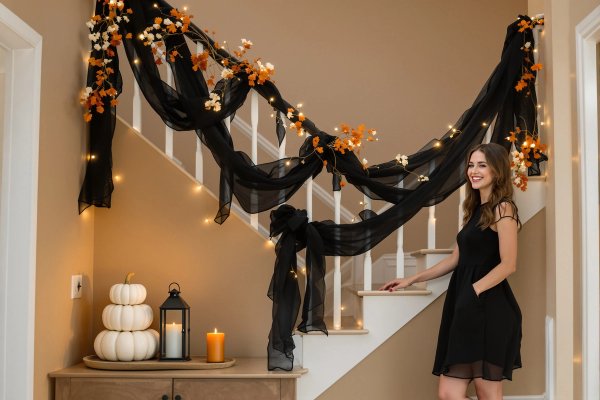
A staircase garland should drape, not sit flat. Start with a 6-foot dried eucalyptus or preserved boxwood garland ($20–$50). Attach it at the top newel post with wire or a simple ribbon tie, then loop it loosely down the banister — three loose swags, not a tight spiral — securing at each baluster with small floral wire.
Tuck in dried orange slices, cinnamon sticks, and small dried rose hips at each swag's lowest point. Keep additions small and spaced — one cluster every 18–24 inches feels intentional. Over-stuffing it reads as forced.
For a doorway between the entry and the main room, drape the garland over the top of the door frame and let it fall 4–6 inches down each side. Secure with removable adhesive hooks rated for 5 lbs or more so there's no door frame damage.
Mirror and Frame Garland Styling for Secondary Rooms and Hallways

A short garland — 18–24 inches — draped over the top of a large mirror or picture frame in a hallway does something a full garland can't: it brings the seasonal palette into a passing-through space without demanding attention.
Drape it asymmetrically, slightly more to one side. Tuck in one or two dried elements that match whatever appears on the staircase garland — consistency of materials is more important than consistency of scale.
This technique is especially effective in hallways and powder rooms. Guests pass through or stop briefly, and the small foliage detail registers as warmth without the space needing a full styling treatment.
Floral and Foraged Details: The Natural Texture Layer That Makes Thanksgiving Decor Feel Collected
Floral and foraged details are the finishing layer. They're what makes the difference between a home that looks decorated for the season and one that looks like it's always been this warm and layered. The trick is placing these details in the spaces between your hero zones — side tables, shelves, window ledges — so the eye has somewhere to rest at every scale.
This section covers both small floral arrangements and structural foraged accents.
Small Thanksgiving Floral Arrangements for Side Tables, Shelves, and Secondary Surfaces

Small thanksgiving floral arrangements work in bud vases or low ceramic bowls — nothing taller than 8 inches for side tables. Dried protea, dried cotton stems, and dried bunny tail grass are all good choices: they last the full season, they don't require water, and they come in warm neutral tones that sit naturally in the amber-terracotta-cream palette.
Place them in odd-number groupings: one bud vase beside a stack of two books, or three bud vases of graduating heights on a shelf. The grouping reads as collected rather than placed, which is the quality that makes a home feel lived-in rather than set-dressed.
If you'd rather dry your own botanicals from the garden instead of buying pre-dried stems, Illinois Extension's guide to preserving flowers at home covers air-drying and pressing methods that work well for the same warm-toned stems used throughout this guide.
Foraged Branch and Wood Accents That Add Texture Without Adding Color Noise
Foraged branches — bare oak branches, dried magnolia branches, or natural driftwood pieces — add vertical height in a way no floral arrangement can. Place a single tall branch (36–48 inches) in a weighted matte terracotta floor vase in a corner of the living room or dining room.
Smaller pieces of raw wood — a 12–18 inch section of smooth branch, a piece of driftwood — work as tray accents or shelf supports under bud vases, and rank among the easiest thanksgiving wood crafts to pull together. They add texture without adding color, which is what keeps the palette clean.
Foraged wood accents are the detail that makes a styled home feel assembled over time rather than bought in a single afternoon. They're free if you have any outdoor access, and they anchor the whole natural-texture approach that runs through every zone in this guide.
Whole-Home Cohesion: How to Tie Every Thanksgiving Decoration Back to One Palette
This is the section that makes every section above work as a system. Individual ideas are useful. A repeated palette is what turns individual ideas into a whole-home look. Thanksgiving home decorations that feel collected and expensive nearly always share one characteristic: a small, disciplined color set applied consistently from the first zone guests see to the last.
Here's how to select that palette and apply it without overthinking it.
Choosing and Repeating a 3-Tone Thanksgiving Home Decorations Palette From Door to Dessert Table

The palette used throughout this guide is amber, terracotta, and warm cream. Those are not the only options — but they are the most forgiving for Thanksgiving because they appear in natural materials (dried botanicals, raw wood, linen) that are available at almost every price point.
Apply each tone with intention by zone. Amber leads in lighting elements — votives, glass vessels, taper candles — because it reads warm in low light. Terracotta leads in solid objects — ceramic bowls, cushion covers, tray surfaces — because it grounds without darkening. Warm cream leads in textiles — linen runners, napkins, throws — because it softens and creates breathing room between the stronger tones.
Repeat at least two of the three tones in every single zone you style. Front door wreath: terracotta sash ribbon, amber dried orange slices, cream dried pampas tuck. Entry table: amber votives, terracotta bowl, cream linen runner. That's all it takes — two tones per zone, applied deliberately, builds the through-line that makes the whole home read as one considered space.
Where to Splurge and Where to Keep It Simple: Thanksgiving Entertaining Ideas That Stretch a Budget
Invest most at the table and the entry. These are the two zones guests photograph and remember. Amber glass chargers ($8–$15 each), a quality linen runner ($30–$60), and a well-built wreath ($35–$65) are worth the spend. These pieces will return for multiple years.
In secondary rooms — hallways, the guest landing zone, window ledges — keep it simple. A $12 bundle of dried eucalyptus does more work per dollar than any decorative object in those spaces. Foraged branches cost nothing.
The splurge-vs-simplify framework for thanksgiving entertaining ideas is this: invest where eyes linger, simplify where guests pass through. Garland, foraged wood, and small bud vase groupings are your filler tools — they extend the palette into every corner without requiring a significant budget in each zone.
For broader whole-home decorating strategy and how layering decisions work across very different style categories, the complete Japandi living room resource covers the same restraint-and-repetition logic applied to a year-round context — it's worth reading for the decision-making framework alone. And if the texture-layering approach here appealed to you, Boho Coastal Bedroom: 15 Relaxed Layered Designs for the Free-Spirited Decorator applies the same grouping-and-scale logic in a different seasonal context.
This is the first piece in a full Thanksgiving series — dedicated deep-dives on the tablescape, the wreath, and individual rooms are coming next, so more specific how-tos will link back here soon.
Frequently Asked Questions
When should I start decorating for Thanksgiving? The weekend two weeks before Thanksgiving is the most practical window. It gives you time to style each zone without rushing, and the decor stays looking fresh for the full hosting period. Garland and dried arrangements placed too early can shed; anything placed the week before tends to stay in good shape through the holiday.
What colors work best for Thanksgiving home decor? Amber, terracotta, burnt sienna, warm cream, and deep burgundy are the tones that read most naturally in late November light. Avoid bright orange — it reads more Halloween than Thanksgiving — and steer clear of pure white, which looks cold against the warm natural materials that make fall decor feel seasonal.
How do I make Thanksgiving decor look cohesive across a whole home without spending a lot? Choose two or three tones and repeat them in every zone, even minimally. Dried botanicals, linen textiles, and amber glass carry the palette at low cost. Invest in two or three hero pieces — the wreath, the table runner, the charger set — and let foraged branches and simple votive clusters fill the secondary spaces.
The surest way to get the most from this guide is to style it over the weekend before the holiday — one zone at a time, palette swatch in hand. Save or pin this page now so it's waiting for you when that Saturday morning arrives.
Comments